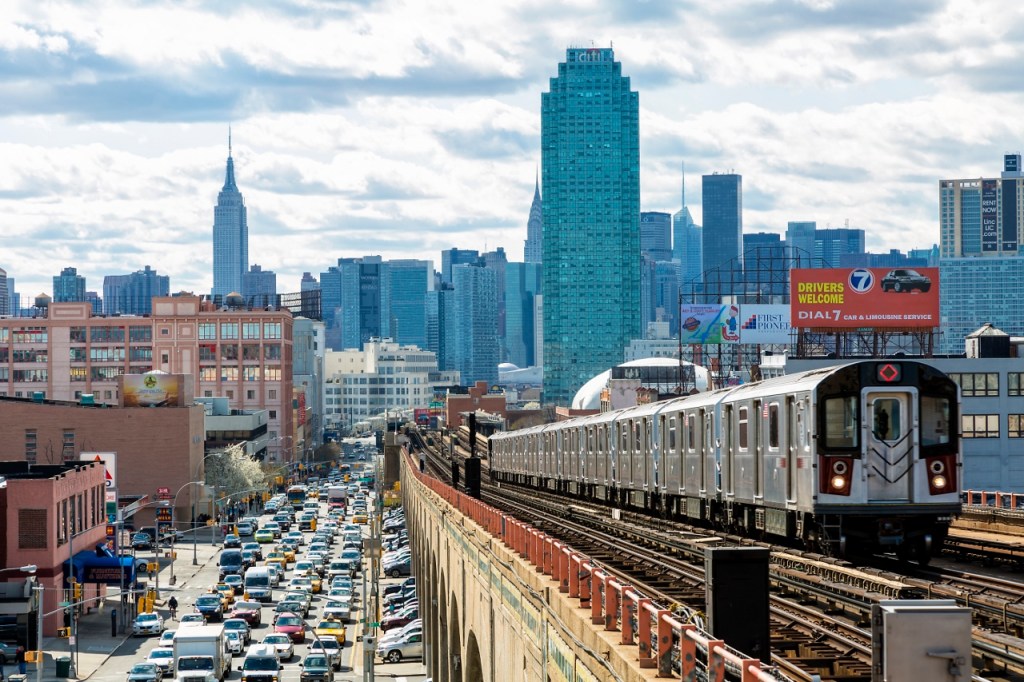
The temperature of New York City was just on the verge of a sharp drop in early October. I was on my day trip to the city on a Saturday with crisp weather and was shivering in the early morning chill while walking around. My friend Tarek proposed a warming food crawl in the famous Jackson Heights neighborhood of Queens, joined by his partner Jane. I have long heard that Jackson Heights is a beautiful melting pot of cultures, but in my experience heretofore it was only a junction between the NYC subway and LGA transit buses on my way in and out the city. While the idea itself was totally ad-hoc, Tarek, with his usual PhD-level knowledge in navigating crowd-sourced information, quickly executed a list of stops with some handy suggestions from the FoodNYC Subreddit. It consists of three famous food trucks and one dessert shop, all within a few blocks of each other. With a plan settled, we then met around noon time on the 7-train bound to Queens with our stomachs grumbling.
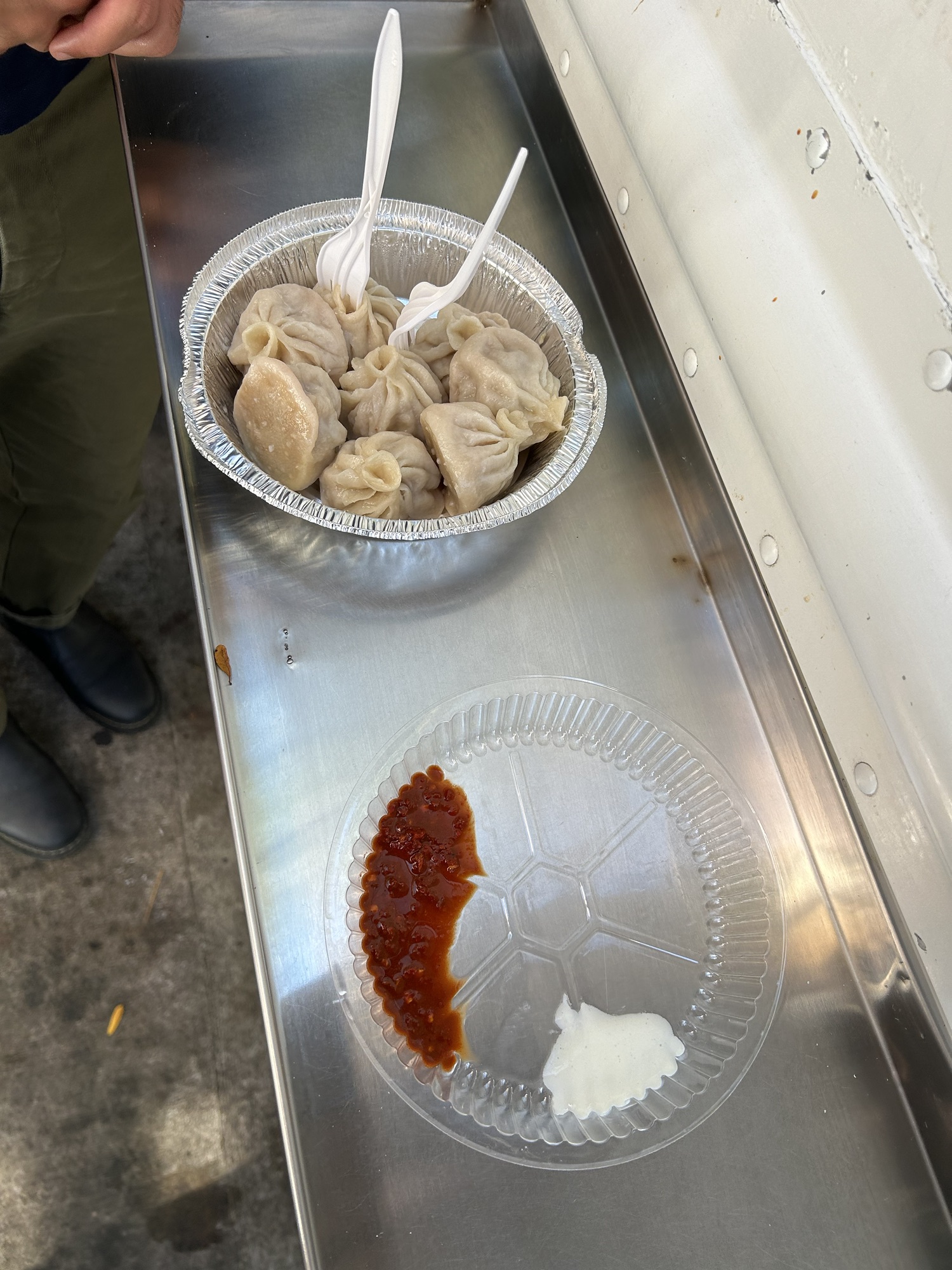
Our first stop was Amdo Kitchen right by the Jackson Heights-Roosevelt Avenue metro station. It served authentic Tibetan momos (i.e. soup dumplings) cooked to demands with two sauces on the side, a spicy sauce made of chili oil and a sort of white sauce. We ordered eight beef momos and stood by as the chef started the steamer to cook the dumplings. As we watched the steam wafting out of the food truck window, our stomachs’ complaints deepened. To lighten the mood, we joked about the “100 frozen momos” on the menu – for a whopping amount of 60 bucks, we could buy a month’s worth of frozen momos, a great deal in today’s inflation rate, but unfortunately we were unable to carry them with us (in case you ever wondered, Tarek eventually went back to get them).
Once the momos were ready, we stood by the small table on the truck and started chomping down these juicy dumplings with the sauces. To our delight, the momos were full of richly flavorful soup, which we readily slurped down. Both the skin and the filling were also extremely chewy. They were so hearty that our riotous stomachs were appeased after only two or three momos each. The sauces only added to the flavor. Together, they made each bite a satisfactory mix of meaty soup and tangy, spicy chilly oil or sweet, creamy white sauce. Sated, we wiped our mouths and vocalized our amazement. Happily, this was only the first of our many stops.
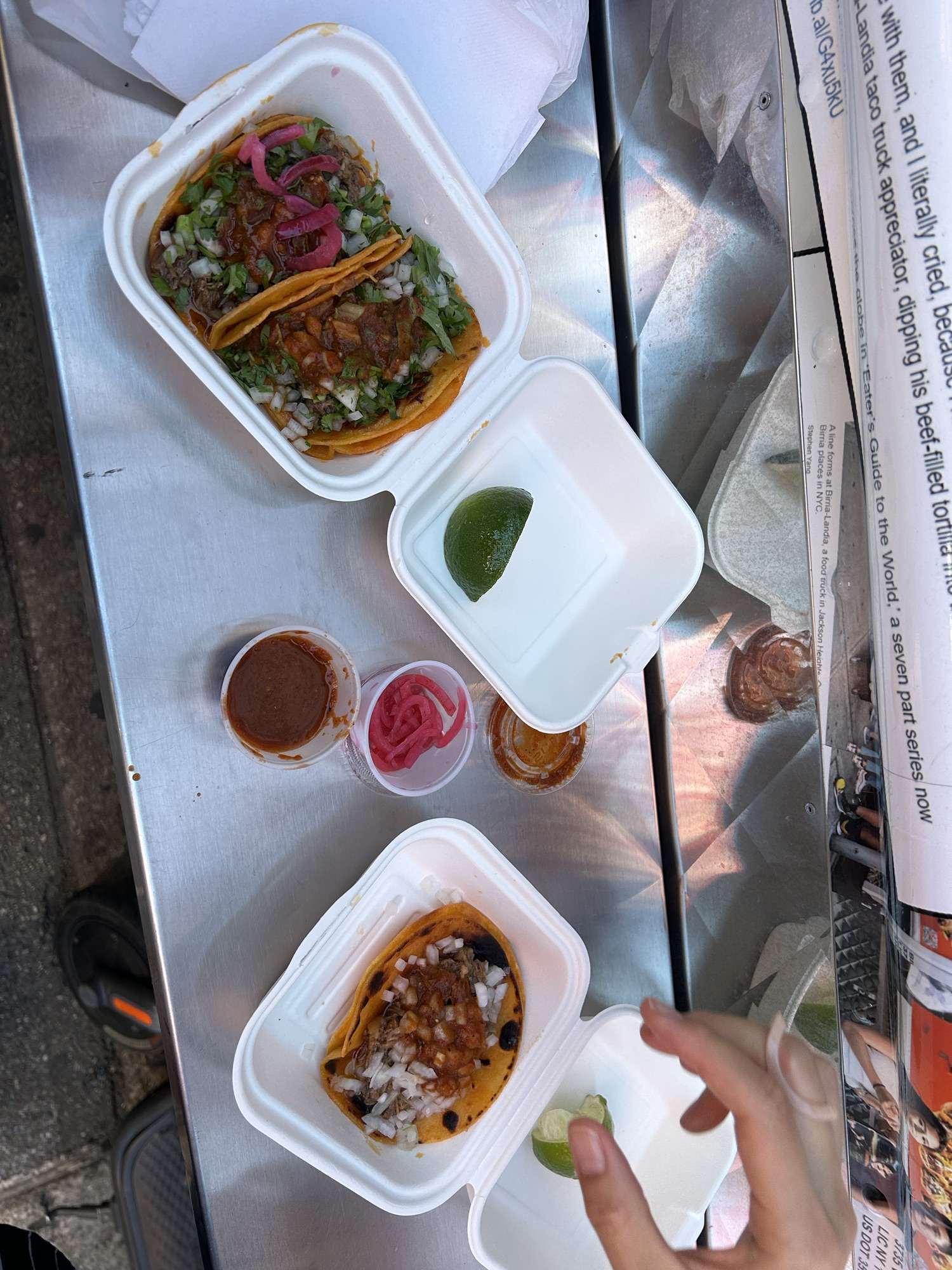
Our next stop was the famous birria taco truck Birria Landia. The owners claimed outright that they were the best in town, so much so that they were equipped with one of the biggest food truck I had ever seen, almost twice as long and as large as Amdo Kithen, not to mention that it also looked squeaky clean. To back up their claim, they coated their truck with enlarged snapshots of newspaper articles showcasing their success story, as if size was not the only thing that mattered. We ordered three prized birria tacos, and knowing the ultra-competitive landscape of Mexican food, held onto our skepticism. What could possibly make their tacos truly as outstanding as they have claimed?
We were thoroughly shocked when we let our first bites of the taco sink in. These tacos completely upended our prior belief – they were such a masterful combination of flavors and heat that we could not stop raving about them. The tortillas were fried golden crispy, while the birria beef fillings were well cooked and salted. The entire taco had a rich beefy flavor that was perfectly complemented by the tanginess and acidity of onion, cilantro, and lime juice. It turned out that Birria Landia fried their tortillas in beef fat – a move that turned a common street fare into an instant classic. Later, we all agreed that this was the finest eat of the food crawl that day – we would come back for more in a snap if not for that we were eating other food in the same interval.
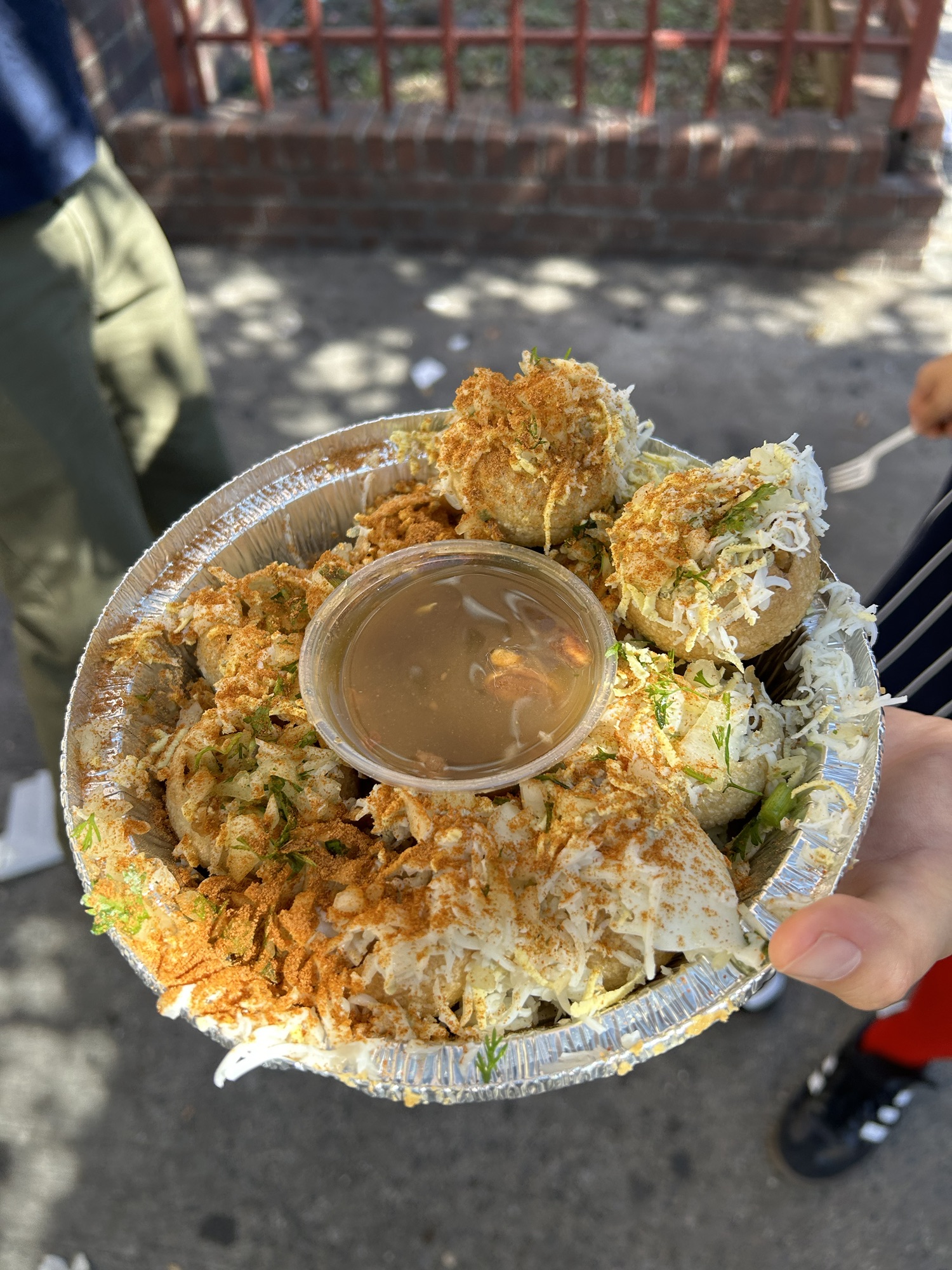
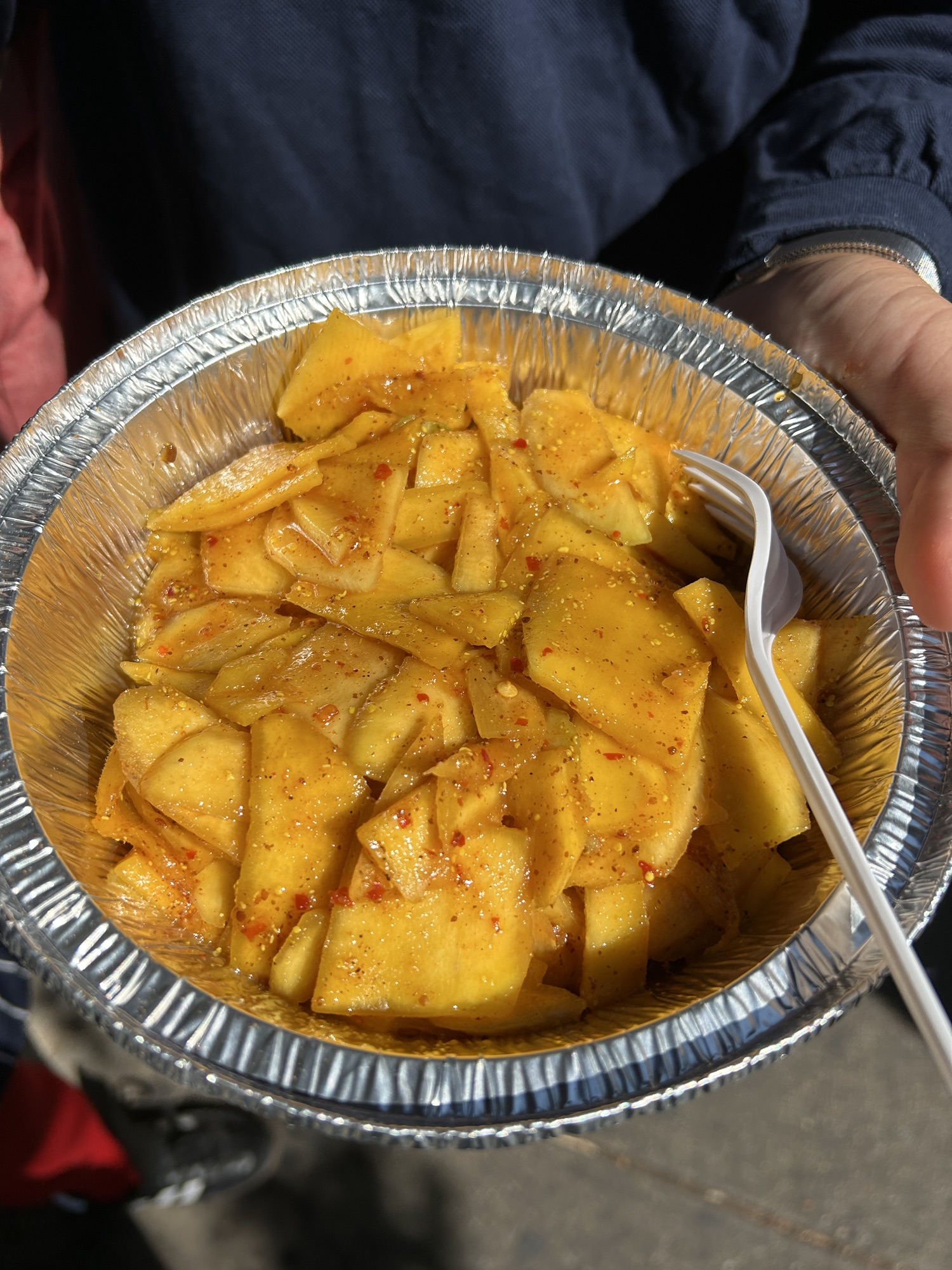
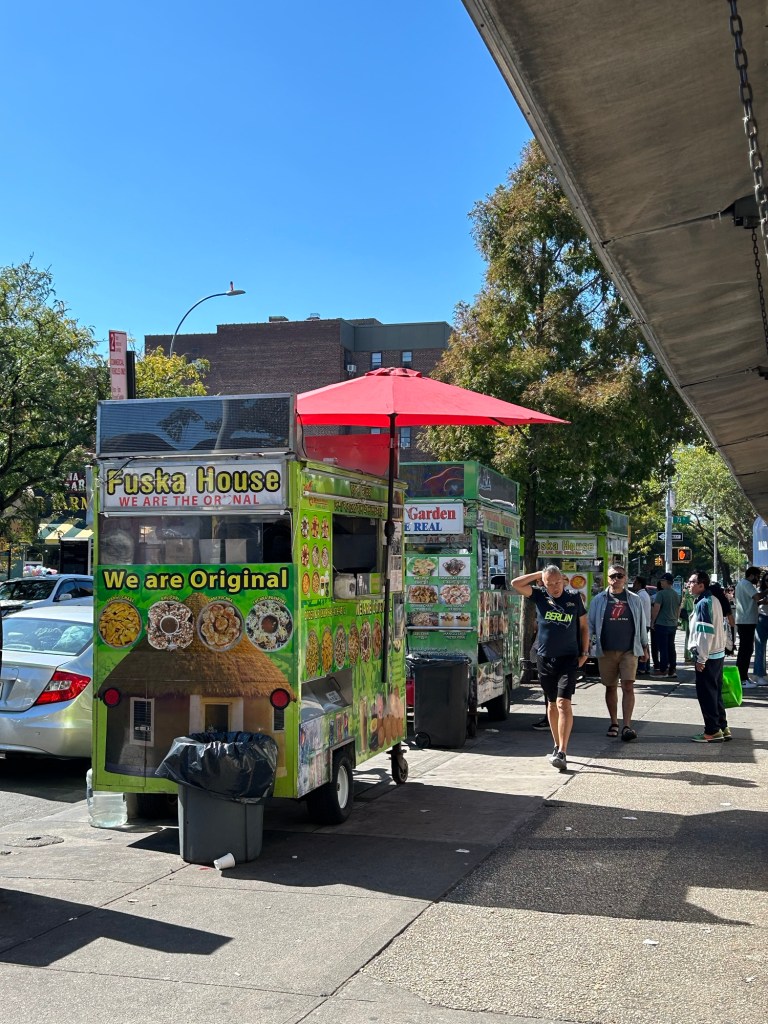
Our next stop was Fuska House, a Bangladeshi food truck known for its Bengali street delights that center on a type of stuffed pastry with a deep-fried shell named Fuska (sometimes spelled Fuchka, also called Pani Puri or Golappa in some parts of India). Fuska House was also featured in The New York Times for its notoriously petty and ostentatious rivalry with another Bangladeshi food truck called Fuska Garden. Their rivalry was such that they would park at the same spot and duel each other on selling the same kind of Bengali street food. The situation has definitely not changed when we arrived. We also saw not one but two Fuska House trucks park on both sides of Fuska Garden. Each had a banner pointing to the owner being the OG. Initially, we thought that one of the two Fuska Houses was a doppelgänger who joined the rivalry and blatantly infringed on the other Fuska House’s trademark rights, but we could not have been more wrong. When we approached the chef in the first Fuska House, he led us straight to the second Fuska House truck to place the order. The whole scheme was about throwing an entire truck there just to sandwich the rival – the top, top level of pettiness. While we were endlessly fascinated by this unheard-of street food strategy by Fuska House and by how their rival truck, Fuska Garden, had survived all this sort of overt bullying, we quickly remembered that our ultimate goal was to try their food, so we purchased two of the famous dishes, the Fuchka (#1 on the menu) and mango chaat.
Both dishes came out in bright colors and perfectly plated. They also both had a kick of spiciness. The Fuchka was a bit more flavorful with the shredded egg, while the mango chaat had the mix of tanginess and fruitiness as we expected. We felt the food was solid and the portion generous, but to be honest, we were not that impressed with the flavors of the food here compared to the previous two stops. Maybe we were beginning to be full after several momos and birria tacos. Or maybe we had yet to develop the palate to be capable of fully appreciating the rather exotic flavor of the Fuchka. Either way, the food of Fuska House did not stand out as much as its colorful rivalry story with Fuska Garden, which would go on as long as people come to visit.
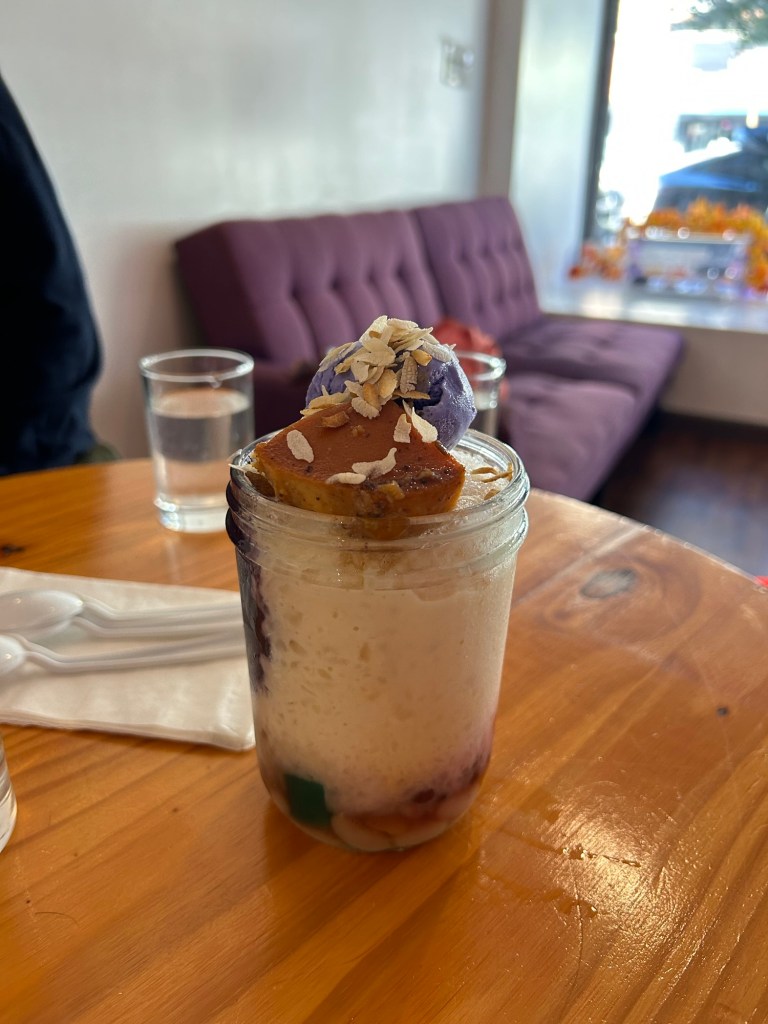
Our last stop was Purple Dough, a Filipino dessert shop that was slightly off the Jackson Heights epicenter. We started off from Fuska Garden and after wandering around the streets for about 20 minutes, we finally reached Purple Dough. We ordered the first item on the menu, which was a signature dessert of the Philippines called halo halo (literally means “mixed” in the native Tagalog language), made of a mix of shaved ice, heavy cream, gummies, red beans, sago, agar, and ube jam, topped with a flan cake and a scoop of ube ice cream. The halo halo was so hefty that it was served in a mason jar, and it was quite a beauty (photo attached!). We split the whole affair as we were getting really full. Of all the ingredients, my personal favorite was definitely the ube ice cream and ube jam, both of which were sweet and creamy, tastes that I associated with the tropical islands Southeast Asia. Tarek and Jane munched on the rest of the dish, and we finished it in a short moment.
As we sat looking at the empty mason jar, we realized that the Jackson Heights Food Crawl Episode 01 was coming to a conclusion. There were no shortage of gems along this trip and it was quite a treat to be living inside or near New York City and exploring the diverse food scenes the city had to offer. This was exceptionally true for us, as all of us had been spending quite some time in Suburban North Carolina where a food crawl like this was an impossible mission except for at some cultural festivals or the State Fairs. In the end, the novelty of the food crawl itself was what made this trip so pleasant and memorable – and we for sure wanted more of food crawls, perhaps doing another episode of Jackson Heights at different locations, or venturing into a new neighborhood to check out their special street food, or maybe revisiting some of the picks during this trip that we could not stop raving about – and buying a giant bag of frozen momos for real.
 A Statistician’s Journey
Leave a comment